
Reviewed · PRIVATE
Plain of jars private tour
The Plain of Jars in Xiangkhouang Province is one of those places that feels mysterious even after you’ve seen photos, because the jars are scattered across real hills and fields. Doing it as a private, 1-day tour from Phonsavan is a smart way to cover multiple key clusters without getting lost in details.
Two things I really like about this day: the stop at Ban Naphia war spoon village, where local families make about 1,000 spoons each day for the market, and the way the route connects the jar sites with short walks and viewpoints. The pacing also gives you room to ask questions to your English or Thai-speaking guide as you go.
One possible drawback is that it’s packed into a single day with several short visits. If you want a slow, long-form “stand still and soak it all in” approach, you might wish you had more time at each jar site.
Key highlights you’ll actually feel on the day
- War spoon village at Ban Naphia: see practical craft tied to recycling and local trading
- Site 3 near Ban Xieng Di: quick access plus a walk through rice fields
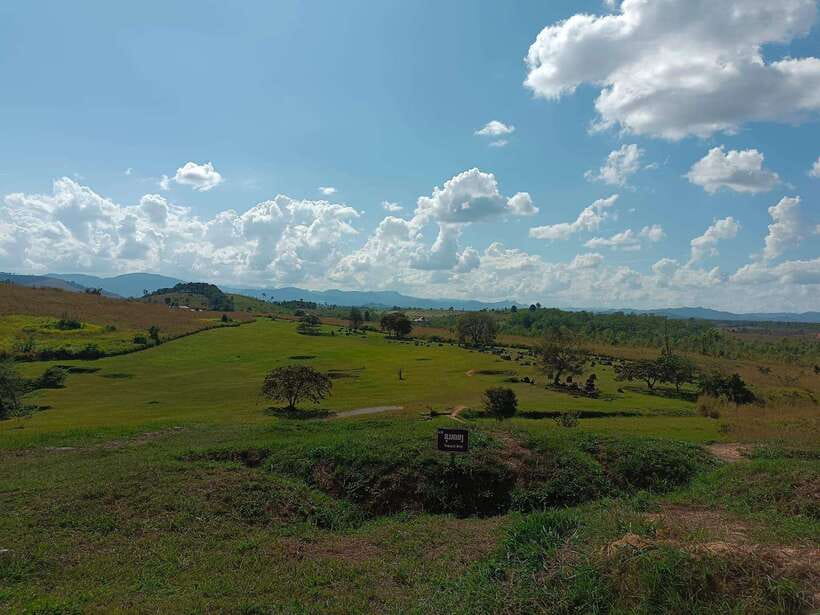
- Site 2 at Ban Na Kho: panoramic hill views with a cluster that includes around 100 jars
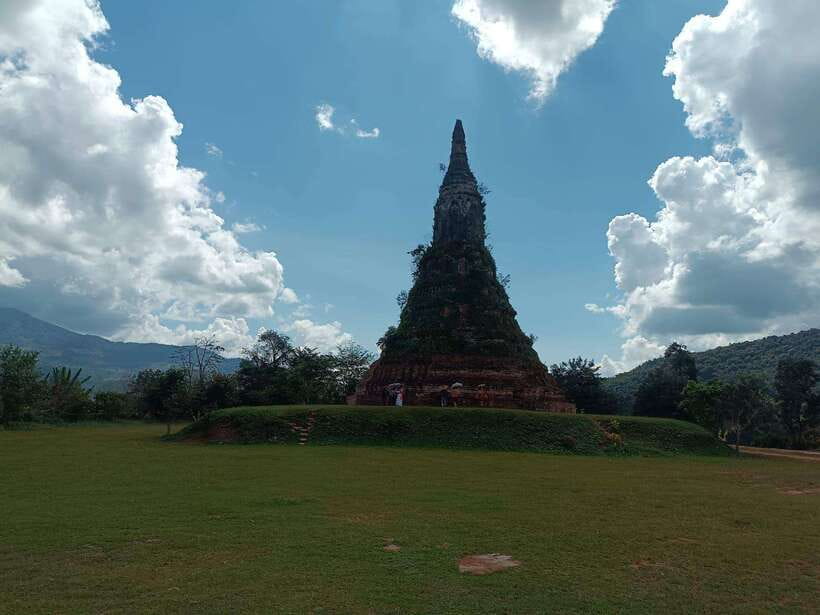
- Muang Khoun ruins: Wat Phia Wat and That Foun stupa linked to Vietnam War-era remains
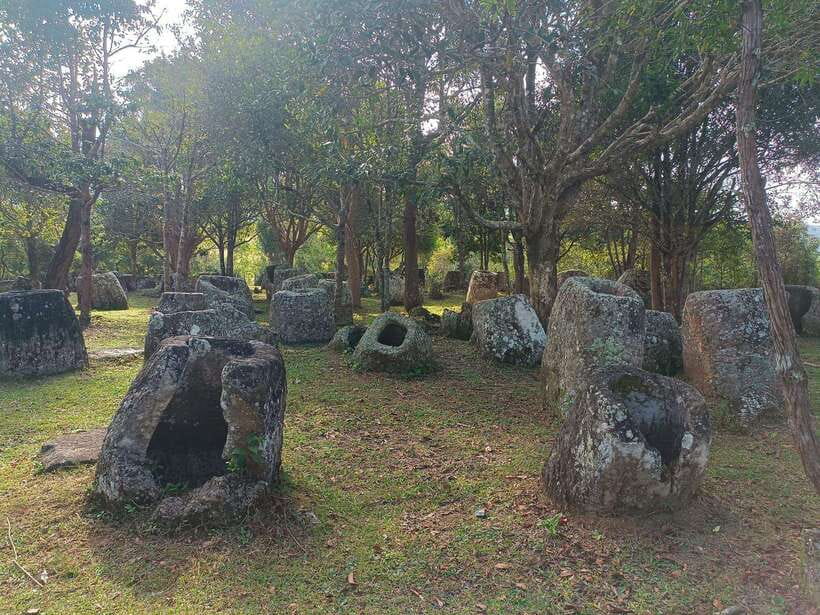
- Site 1, the biggest cluster: the largest stop covers about 334 jars
- Full-day value: air-conditioned vehicle, entrance fees, and lunch included
Why the Plain of Jars still feels unreal, even in daylight
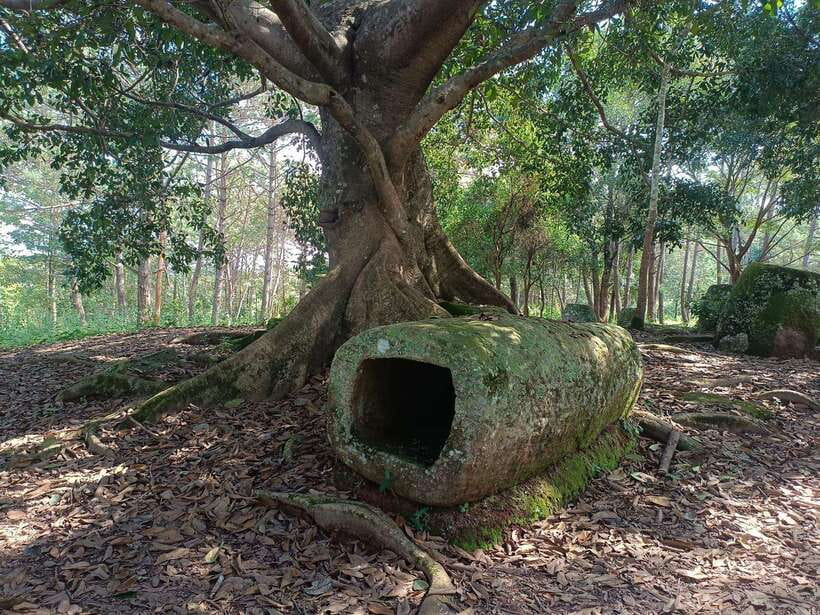
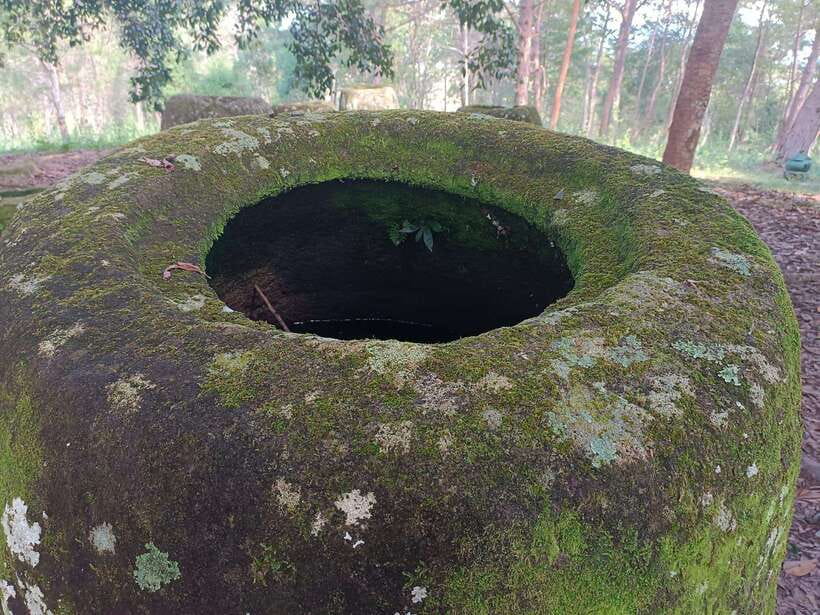
The Plain of Jars is a big archaeological landscape spread around Xieng Khouang Province, with jars in different sizes scattered across several areas. It’s not one single “museum display,” it’s a site made of many clusters, often tied to viewpoints, pathways, and fields you can walk through. That’s why a good tour matters, because seeing only one spot can make the whole place feel random.
In one day, you’ll get the story in pieces. You’ll start with a living village stop, then move to jar sites that are separated enough to feel different. If you like archaeology but also like normal life, this mix helps you understand why people are still connected to this region today.
More of Laos to think over
- Vientiane Cultural Tour with Private Guide
★ 5.0 · 80 reviews - Luang Prabang Private Minivan
★ 4.5 · 36 reviews
Price and logistics: what you’re really paying for at $110 per person
At $110 per person for a 1-day private tour, you’re not just buying access to jars. You’re buying time, transport comfort, and a guide who can stitch the day together.
Here’s what’s included that makes the day feel efficient:
- Air-conditioned vehicle for the full drive
- Lunch (local menu)
- Entrance fees and all fees and tax
And here are the cost items to plan around:
- Soft drinks are not included
- Personal spending on handicrafts is up to you
Why this is good value: the Plain of Jars areas are spread out around Phonsavan, and a private driver plus guide removes the friction of figuring out tickets, timing, and which sites are worth your hours. You also get a private group setup, which usually means fewer compromises on pace and questions.
Ban Naphia war spoon village: hands-on craft, not just a photo stop
You’ll begin with a visit to Ban Naphia, known for its war spoon making village. Plan for about an hour here, because it’s the kind of place where you’ll want to slow down and actually watch the work.
What makes this stop special is that the output is immediate and local. Families produce roughly 1,000 spoons each day and trade them to the local market. In plain terms, this isn’t a souvenir factory for tourists. It’s a craft system that supports household income and keeps a tradition of practical recycling alive.
A practical tip: pace yourself with your questions. Ask how the work connects to everyday life and local buying habits. A good guide can also help translate what you’re seeing into context you can use, not just random facts you forget later.
Site 3 at Ban Xieng Di: short time, strong atmosphere
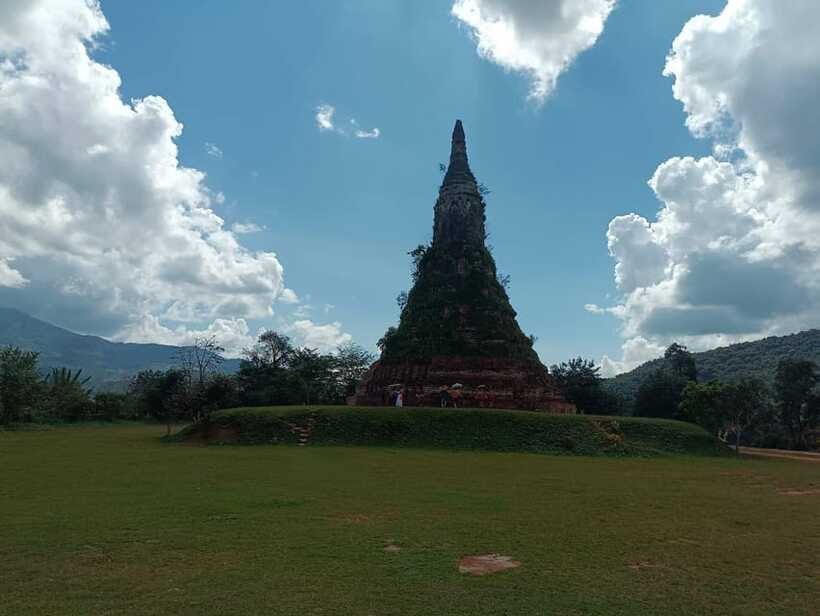
Around 10:00 AM, you’ll head to Plain of Jars Site 3 near Ban Xieng Di. The visit includes time for the ticket office area and then time on-site, for roughly an hour total.
This stop has two ingredients that tend to land well with people:
- You get there quickly, about a 10-minute access walk to the jars once you’re in the area.
- You’ll pass through rice fields, so the jar setting feels grounded in agriculture, not just “ruins in the distance.”
I like this stop because it teaches you how to look. Instead of treating every jar like an isolated curiosity, you start noticing how jars relate to paths and open spaces. If your camera roll needs variety, this is also where you’ll catch the jar views framed by working fields.
Consideration: because it’s a shared day with multiple sites, you won’t have hours to wander freely. If you’re the type who likes to take dozens of the same angle shots, I’d focus on one or two good viewpoints and then move on.
Site 2 at Ban Na Kho and phousalato mountain: panoramic payoff
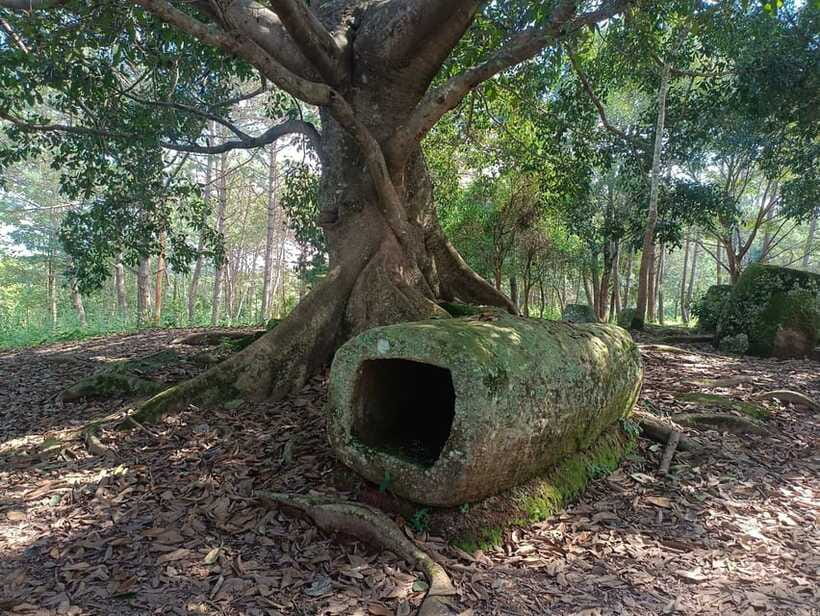
Next comes Site 2, located at Ban Na Kho, around late morning. You’ll spend about an hour here, and this is the viewpoint-driven portion of the day.
The key detail to know before you arrive: the site sits near phousalato mountain, and the panoramic views include a cluster of around 100 jars. The jars are split across the feeling of two hills, so you’re not just looking at one “flat” display. You’re looking out over space, then back at jars that feel positioned for landscape and distance.
This is the stop I’d recommend you prioritize if you love scenic travel. Even if you don’t remember every archaeological detail, the arrangement of jars against the hills makes the site easier to understand.
Practical advice:
- Take a moment to orient yourself before you start photographing.
- Look for sightlines from where the jars sit to where you’re standing.
That’s how the site starts making sense fast.
Lunch in Ban Na Kho: the calm break that keeps the day enjoyable
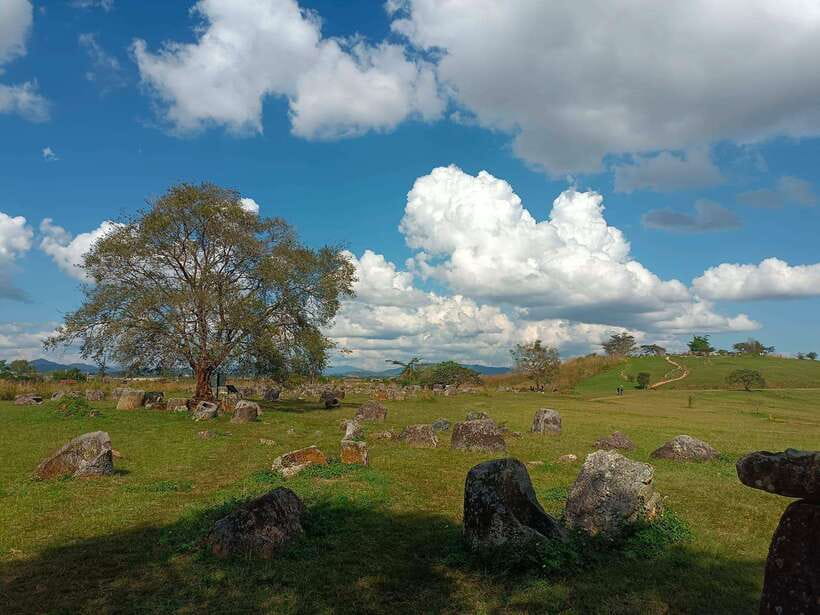
Lunch is timed for about 12:30 PM at a local restaurant in Ban Na Kho. This is more than a scheduling stop. It’s the moment your brain shifts from “jar zone mode” back to “human pace.”
Because soft drinks are not included, you may want to plan what you’ll drink with your meal. If you’re sensitive to heat, drink water between stops too. The day moves from village to fields to viewpoints, and the breaks help you stay awake and pleasant, not cranky.
If you’re hungry, eat. This day is structured so you can keep energy for the afternoon ruins and the last big jar cluster.
Muang Khoun former capital ruins: Wat Phia Wat and That Foun
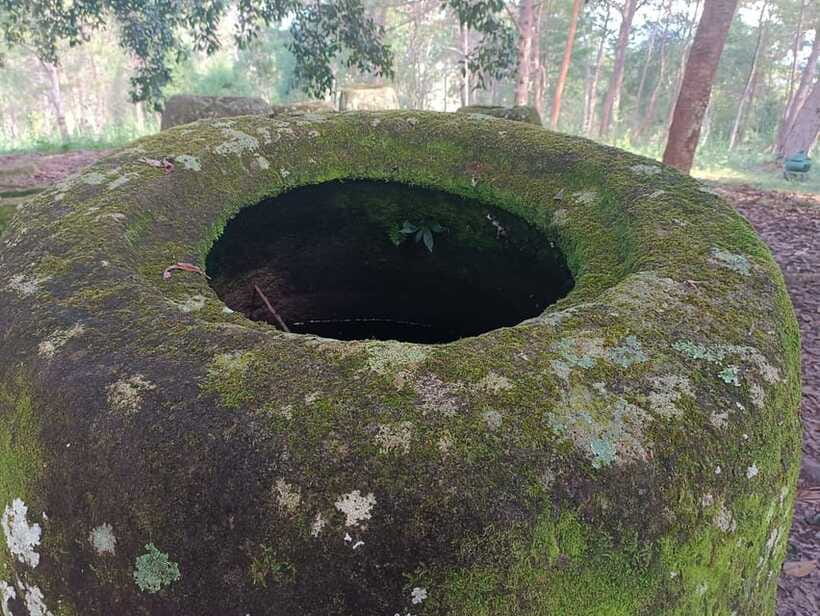
After lunch, the route shifts from jars to ruins tied to Muang Khoun, the former capital of Xieng Khouang Province. You’ll visit remaining temple structures such as Wat Phia Wat and That Foun stupa, with about 20 minutes allocated for this stop.
Why this matters: it prevents the day from feeling like a one-topic checklist. The Plain of Jars sites are about archaeology and ancient landscape use. Muang Khoun ruins bring in a later layer of the region’s story, including remains associated with the Vietnam War.
You don’t need to know every term to appreciate what you’ll see. A good guide can help you connect the physical remains to why they are still visible and what the local area remembers.
Practical consideration: ruins stops can be either quiet and reflective or fast and windy. Keep your expectations modest. You’ll get a meaningful look, but not a long museum-style explanation session.
Site 1, the largest cluster: the 334-jar moment
By mid-afternoon, you’ll reach the largest Plain of Jars zone at Site 1. This is the big finale stop, with about an hour on-site. The highlight here is the scale, with about 334 jars in the largest plain.
I like the order of this day. Starting with smaller or more viewpoint-focused areas helps your eyes learn what to look for. Then Site 1 hits like a wave, because you finally see the density and repetition that make the Plain of Jars famous.
What to do when you arrive:
- Start by taking in the whole area, not just the nearest jars.
- Then walk slowly for a few minutes and repeat the “big picture” look.
That simple loop helps you avoid the common mistake of only photographing what’s closest.
If you love archaeology, this stop is the one that will likely feel most satisfying, because it delivers the scale you’ve heard about.
Wat Hai Heen big Buddha pass-by: a quick cultural pause
On the drive back, you’ll pass by Thonghaiheen Xaiyalam Temple, also referred to as Wat Hai Heen. The day also includes a quick stop related to a big Buddha statue at Wat Haihin.
This isn’t the main event, so keep it in the “see it, stretch your legs, keep moving” category. It’s a nice reset after the jar sites, and it gives you one more recognizable landmark as you head toward Phonsavan.
How to get the most out of this one-day plan
To make this day feel great, I’d plan around two things: attention and comfort.
Attention tips
- Use your guide as a translator of meaning, not just a reciter of facts. Ask how the jars are thought about and how local communities relate to the site.
- When you reach each jar cluster, take five minutes to understand the layout before you start rushing for photos.
Comfort tips
- Wear shoes that handle uneven ground and short walks through fields.
- Bring water. Soft drinks are not included, and you’ll want hydration across multiple stops.
- If you buy handicrafts, set a small budget. This tour gives you time at markets and villages, but personal spending is on you.
Who this tour suits best
- You want a private day in and around Phonsavan, with a local guide handling the route.
- You care about seeing multiple jar sites in one day, including the biggest cluster.
- You like cultural stops that connect to real livelihoods, like the war spoon making village.
If you’re the kind of traveler who loves depth above speed, you may feel you’re skimming. But if you want the best hits with a guide and a smooth drive, this structure fits nicely.
Should you book the Plain of Jars private tour?
Yes, I think you should book it if your goal is to see the major Plain of Jars clusters plus a meaningful village and ruins stop in one organized day. The value comes from the package: air-conditioned transport, entrance fees taken care of, and lunch included, so you’re not constantly recalculating what costs extra or how long transfers will take.
Book it with confidence if you’re excited by scale (Site 1 with about 334 jars), variety (different jar zones), and real local life (Ban Naphia’s spoon making for the market). I’d pass or consider a slower option if you’re after long, unhurried exploration at just one site. This is a well-built sampler that uses your time efficiently in Xiangkhouang.
FAQ
How long is the Plain of Jars private tour?
It’s a 1-day tour, running from pickup in Phonsavan in the morning and returning back to Phonsavan in the late afternoon.
What is the price per person?
The price is $110 per person.
Where does pickup happen?
Pickup is from Phonsavan, and all customers should put the correct address for pickup.
What places do you visit during the day?
You’ll visit Ban Naphia war spoon village, Plain of Jars Site 3 near Ban Xieng Di, Plain of Jars Site 2 at Ban Na Kho, the former capital ruins in Muang Khoun (including Wat Phia Wat and That Foun stupa), and Plain of Jars Site 1 (the largest cluster). You’ll also pass by Wat Hai Heen and a stop at Wat Haihin big Buddha statue.
How much time do you spend at each jar site?
Site 3 is about 1 hour, Site 2 is about 1 hour, and Site 1 is about 1 hour. The village stop is about 1 hour, and the ruins stop is about 20 minutes.
Is lunch included?
Yes. Lunch is included as a local menu in Ban Na Kho.
What’s included in the tour price?
Included are an air-conditioned vehicle, lunch, entrance fees, and all fees and tax.
What is not included?
Soft drinks are not included, and personal spending such as handicrafts is not included.
What languages will the guide speak?
The live tour guide is available in English and Thai.
What is the cancellation and payment policy?
You can cancel up to 24 hours in advance for a full refund. You can also reserve now and pay later, with no payment today.
The newest Laos reviews
- Luang Prabang: Hiking Off the Beaten Track with Picnic Lunch★ 4.8 · 9 reviews
- Luang Prabang: Mekong Fishing with a Local Fisherman & Lunch★ 5.0 · 20 reviews
Private, compared.
Private Full-Day Tour with Buddha Park and Lunch
Read our review →
Private Tour: Vientiane City Tour Full Day with Buddha Park
Read our review →

Private Tour Full-day Morning Market, Villages and Scenic Kuang Si Waterfall
Read our review →