
Reviewed · CITY & TEMPLE WALKS
Private Luang Prabang City Tour
Luang Prabang is interesting on its own, but this private city tour is built around getting it at the right pace, starting early enough to see monks receiving alms. I like the sunrise start because it adds meaning to what you later see in temples and palaces. I also like the private, air-conditioned transport since the day can get long and you will still cover multiple key sites. The main drawback is simple: you commit to an early pickup and a full 10 to 11 hour circuit, so late mornings are not part of the plan.
You get an English speaking local licensed guide and a smooth route through the Royal Palace area, the peninsula temples, and viewpoints over the Mekong. It also helps that entry fees are mostly on you, not hidden in the price, so you can budget for temples and museums without surprise. Just plan for extra costs and bring cash, since admission is listed as not included (and some places close on specific days).
Key highlights you will actually feel during the day
- Sunrise monk alms rounds set the tone early, before the hot sun and tour groups take over.
- A/C private transportation makes a big difference when you are hopping between sites along the river peninsula.
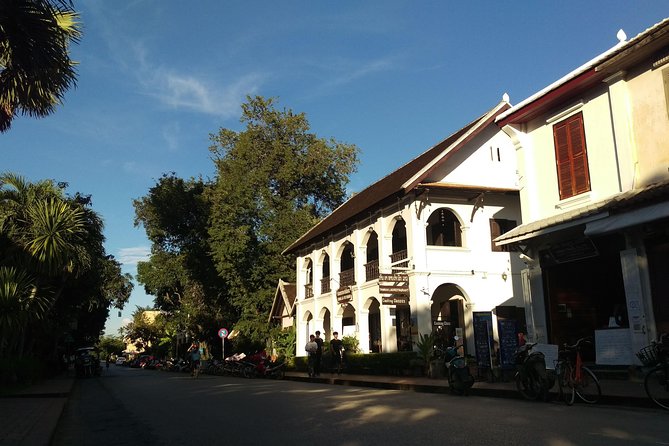
- UNESCO old town context helps you understand why Luang Prabang blends Lao tradition with European colonial influence.
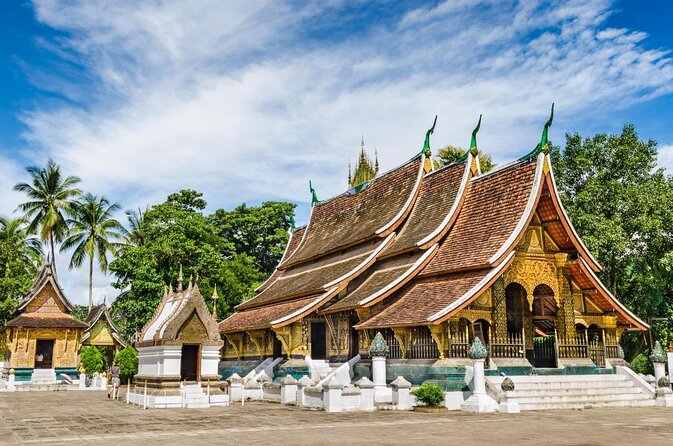
- Temple variety in a single loop includes Wat Xiengthong and Wat Sensoukharam, plus time for a major viewpoint.
- Two museums or information stops with closure dates can shift your day, so you should be flexible.
- Guide attention without group pressure means you can ask questions and move at a comfortable tempo.
Why the sunrise alms rounds set the tone in Luang Prabang
This is the kind of morning start that quietly improves everything later. Instead of rolling into the city after breakfast, you are up early for the sunrise procession of monks receiving alms. You get to see daily Buddhist routine in action, and it makes the temple visits feel more grounded than just sightseeing.
A practical note: the tour pickup timing changes by season. In March to October, pickup is listed around 5:15 am, and in November to February, it is around 5:45 am. That early start matters because the best light and the most peaceful atmosphere happen before the day ramps up.
Because it is private transportation, you are not forced to cram into whatever schedule other people booked. Your guide can also steer you through the morning with common sense, so you spend time watching and learning, not standing around.
More of Luang Prabang to think over
- Luang Prabang Private Minivan
★ 4.5 · 36 reviews - Private Luang Prabang City Tour
★ 5.0 · 27 reviews - Private Tour Full-day Morning Market, Villages and Scenic Kuang Si Waterfall
★ 4.5 · 22 reviews
Morning market near the Royal Palace: daily life, not just photos
After the alms rounds, you head to the Luang Prabang morning market, described as lining quiet streets near the Royal Palace. The market starts early and is typically finished by mid-morning, so doing this after sunrise makes sense.
I like this stop because it helps you get your bearings fast. Even if you just walk, it gives you a sense of local rhythm: what people buy, what is in season, and how normal life looks around the edges of the big monuments. You also get a free admission ticket listed for this segment, so it is a low-cost, high-value way to understand the city beyond temples.
The one drawback is timing. If you are traveling with a flexible energy level, the early wake-up plus market walk can feel like a double hit. Bring a water bottle and plan to keep your day light on chores. Think sightseeing, not errands.
Old Quarter UNESCO area: what you learn changes what you see
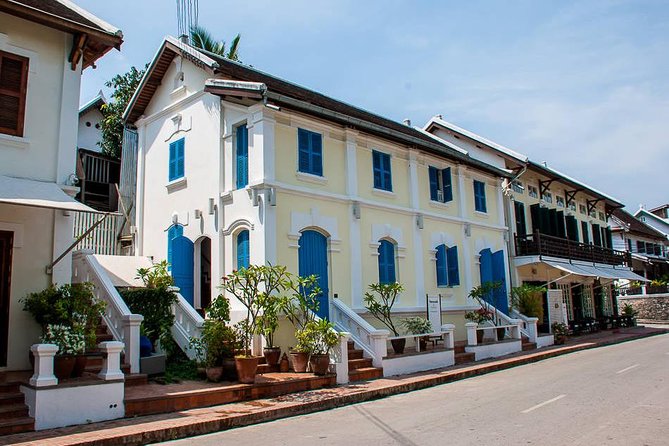
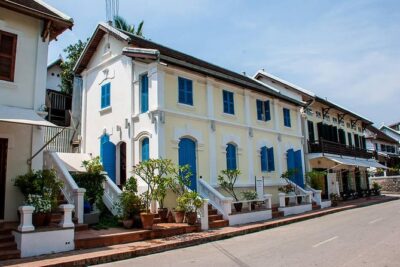
Next comes the Old Quarter Luang Prabang time, listed as a 4 hour block. The city is a UNESCO World Heritage Site because it blends traditional Lao culture with European colonial influences in the architecture and overall look of the area. That blend is exactly why the guide matters here. With context, streets and buildings stop being just pretty and start being readable.
During this part of the day, you get time to connect the dots between old power and everyday life, especially around the Royal Palace zone and the streets that shaped the city’s identity. This is also where you can slow down if something grabs you, like a particular façade, a temple detail, or a street scene that looks different than what you see back home.
The consideration is weather and comfort. This portion is long, so you will want your guide to keep breaks sensible. The tour’s use of an air-conditioned vehicle for moving between stops helps, but once you are walking, you will still feel the climate. Go in expecting heat and light sun, especially if you are visiting in the later part of the morning.
Nam Khan and the peninsula rivers: the geography behind the temples
From the Old Quarter route, you shift toward the river peninsula where the Mekong and Nam Khan meet. You get a 30 minute stop at Nam Khan, described as a small park at the tip of the Luang Prabang peninsula.
This brief pause is more useful than it sounds. The peninsula setting is a big reason the temples here look so calm and intentional. You get a sense of why the city’s religious sites are positioned where they are, and you also get a break from pure walking time.
A nice touch is that it is not a long, exhausting stop. It is a “reset” moment, and it makes the next temple visits feel smoother.
Slow the Luang Prabang day right down:
- Luang Prabang: Cruise to Pak Ou Caves & Kuang Si Waterfalls
★ 5.0 · 1,769 reviews - Luang Prabang: Cruise to Pak Ou Caves & Kuang Si Waterfalls
★ 4.8 · 1,360 reviews - Half Day Mekong Cruise to Pak Ou Caves (Morning / Afternoon)
★ 4.6 · 290 reviews - Luang Prabang: UNESCO World Heritage City Highlights Tour
★ 4.6 · 201 reviews
Wat Xiengthong, also called the Golden City Temple
Wat Xiengthong is one of the most important temple visits on the route, listed for about 30 minutes. It is once known as the Temple of the Golden City, and it is described as holding cultural, historic, and architectural importance. The location is also highlighted as serene, near the tip of the peninsula at the confluence area.
This is where I would focus on quality over quantity. When you only have half an hour, you want to look for the details your guide points out, rather than trying to photograph everything and finish thinking you missed half of it. The best use of time is to pick one or two features to study closely and let the rest be part of the atmosphere.
Possible drawback: 30 minutes can feel short if you tend to linger. If that is you, tell your guide early. In a private setup, they can often help you get a few more seconds where you want them, even if the overall stop length is set.
Wat Sensoukharam: the temple of 100,000 treasures
After Wat Xiengthong, you move to Wat Sensoukharam for about 1 hour. This temple was built in 1718 by King Kitsarath, using 100,000 stones from the Mekong river. The name literally means Temple of 100,000 treasures, which is a detail you will actually feel once you see the temple in person.
I like this stop because it gives you a different kind of connection than the more famous postcard temples. You get a specific story tied to a king and to a real material source, the Mekong stones. That makes the place feel less like an object and more like a piece of history that required labor and intention.
One thing to plan for is that one hour is longer than the prior temple stop. If you are running on sleep debt from the early pickup, pace yourself. Sit when you can, take breaks, and keep water nearby.
Royal Palace Museum: beautiful French colonial setting, watch the closure day
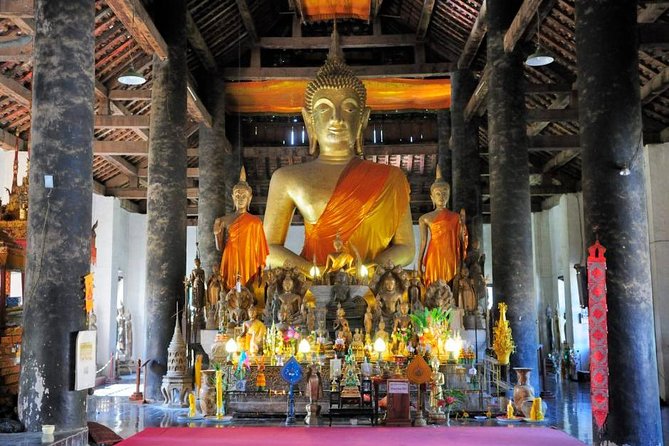
The Royal Palace Museum is listed for about 1 hour. It is housed in the Royal Palace, which is described as having been built by French colonialists between 1904 and 1909. The museum setting is a big draw because the building itself is part of the story of Luang Prabang’s colonial-era history.
Important catch: the museum is closed on the last Thursday of every month. If your route hits that day, your guide cannot magic the doors open. The good news is a private tour gives you room to adjust your time rather than forcing you into a locked-out experience.
Also remember: museum admission is listed as not included, with a typical budget of $5 to $10 per place. So even though the “headline cost” is clear, you still need pocket cash for each paid stop.
UXO Lao Visitors Centre: understanding the war’s lasting impact
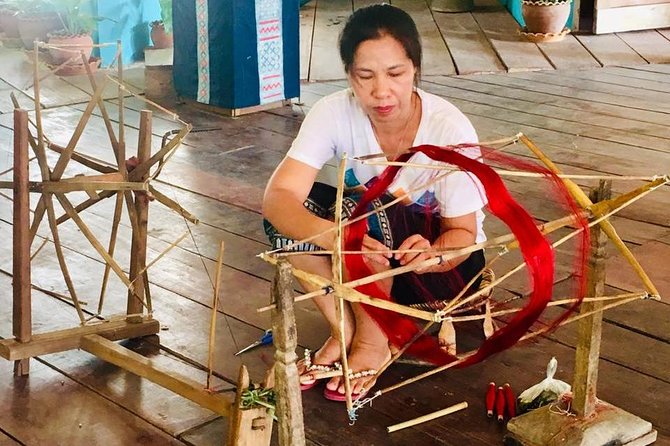
Next is the UXO Lao Visitors Centre for about 30 minutes. This information center focuses on unexploded ordinance, often shortened as UXO, and explains the devastation Laos continues to experience as a result of the Second Indochina War.
This is the kind of stop that adds weight to the day. After multiple temples and UNESCO streets, it is a reminder that history is not only architecture and ritual. It is also the long aftermath that shapes how people live and move through landscapes long after conflict ends.
One practical issue: the center is listed as closed on Saturday and Sunday. So if your day lands on those days, you may not be able to visit as scheduled. If this is a top reason you booked, double-check your planned tour date and ask your provider how they handle closure days.
A 16th-century stupa temple stop: watermelon-domed icon
You will also visit a Luang Prabang temple stop described as the oldest Buddhist temple dating to the 16th century. It is known for a watermelon-domed stupa, and the stop is listed at about 30 minutes.
One detail stands out: the admission entry is listed as a 30,000 kip entrance fee. At the same time, this specific stop is shown with “free” in the ticket line. To avoid confusion during your day, I would treat this as a “bring some kip just in case” moment. Your guide can help you confirm what is actually required when you arrive.
This is a good stop for people who like iconic shapes and simple, readable landmarks. In a packed day, a distinctive stupa can be easier to enjoy than a site where you feel rushed.
Mount Phousi: the classic viewpoint that caps the loop
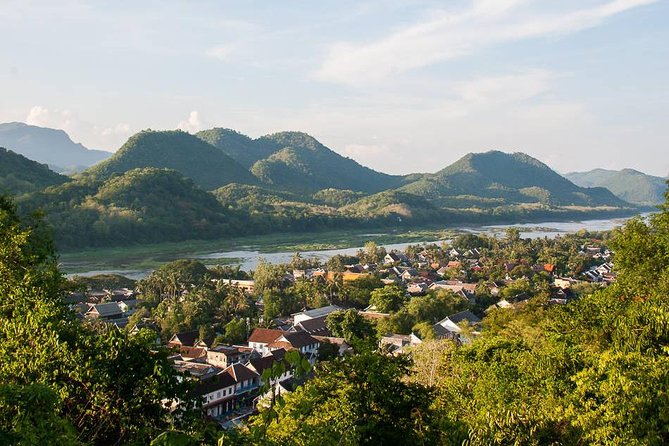
The final major activity is Mount Phousi, listed for about 30 minutes. Mount Phousi is a 100 m high hill in the center of the old town, located on the peninsula between the Mekong and Nam Khan rivers. It is described as the highest point in town and known for giving famous panoramic views.
This viewpoint acts like a wrap-up for the whole tour. All day you have moved through specific temple sites and old streets, but from above you can actually see how the river setting and old town layout fit together. It is the moment where the city becomes a map in your head.
Potential drawback: 30 minutes is short if you want slow, photo-heavy wandering. If you are a “take my time up the viewpoint” type, arrive ready for quick looking, then ask your guide what speed they recommend based on crowds and heat.
Private tour pacing: how to make the day feel comfortable
A private Luang Prabang city tour sounds fancy, but what you really get is control. This tour is built around an early departure, then steady site-to-site movement, with an English speaking local licensed guide and a private air-conditioned vehicle.
Here is how I would make it work in real life:
- Wear comfortable shoes. You will do enough walking that sore feet can ruin temple time.
- Keep your expectations for each stop realistic. Some are 30 minutes, some are an hour. That is not a flaw, it is the math needed to cover a UNESCO area in one day.
- Use your guide as your advantage. The guide’s job is not only transport, it is interpretation, especially in the Old Quarter UNESCO portion and at the palace museum.
The best feedback style in the provided reviews is consistent: the day is organized, transport is punctual, and guides handle people with care. That lines up with what you want from a private plan in a place where the details matter.
Price and value: what $100 per person covers, and what to budget
The price is listed at $100.00 per person, for a 10 to 11 hour private tour with pickup and private transportation included. You also get an English speaking local licensed tour guide.
What you should budget extra for:
- Temple and museum admission, listed as $5 to $10 each place
- Lunch is not included
This is actually pretty fair value for what you get. You are paying for three big things: guide time, private vehicle comfort, and a route that hits multiple major landmarks rather than one or two. In many places, the real cost of a “good day” is transportation plus interpretation. Here, those are part of the package.
To keep costs from creeping up, I suggest you do one simple step before you go: carry enough cash for multiple entry fees, not just one. Since the itinerary includes several paid sites, you will likely use that budget more than once.
When closures can affect your day
Two closures are clearly flagged:
- The Royal Palace Museum is closed on the last Thursday of the month
- The UXO Lao Visitors Centre is closed on Saturday and Sunday
In a private format, your guide can adjust the flow so the day still feels complete. Still, you should be realistic. If a closure hits a place that matters a lot to you, your best strategy is to choose dates that avoid those patterns, or be ready to accept a substitution.
Who this tour is best for
This private Luang Prabang city tour fits best if you:
- Want the top UNESCO sites plus key temples without planning a route yourself
- Prefer a guide who can explain what you are seeing, especially in the Old Quarter area
- Like structured sightseeing but still want privacy and flexibility in how you move within the day
- Are okay with an early start to catch the monks receiving alms
It might be less ideal if you hate early mornings or if you want a slow, drift-around day with no fixed stop lengths. The schedule is built for maximum coverage.
Should you book this private Luang Prabang city tour?
If your goal is to understand Luang Prabang, not just collect photos, I think this is a strong choice. The sunrise monk alms rounds give the day meaning, and the route ties together Royal Palace culture, UNESCO old town context, peninsula temples, and a final viewpoint that helps it all click.
I would only pause if you are very sensitive to early wakeups or you are traveling on a day that might land on the Royal Palace Museum closure or the UXO center closure. If those stops are must-dos for you, pick your date carefully.
Overall, the value comes from the combination of private comfort, an English speaking local licensed guide, and a route that covers the big names of Luang Prabang in one efficient day.
FAQ
What time is pickup for this Luang Prabang tour?
Pickup is listed as early morning around 5:15 am from March to October, and around 5:45 am from November to February.
How long does the tour last?
The duration is listed as about 10 to 11 hours.
What is included in the price?
Included are private transportation and an English speaking local licensed tour guide.
What is not included, and how much should I budget?
Not included are admission to temples and museums (listed as $5 to $10 each place) and lunch.
Is this a private tour or will I join other people?
It is private, meaning only your group participates.
Are any museums or centers closed on certain days?
Yes. The Royal Palace Museum is closed on the last Thursday of each month. The UXO Lao Visitors Centre is closed on Saturday and Sunday.
The newest Luang Prabang reviews
- A Relaxing Day at the Kuang Si Falls★ 4.5 · 3 reviews
- Sunset Cruise in Luang Prabang with Live Performance★ 4.5 · 3 reviews
- Luang Prabang Night-time Explorer★ 3.5 · 3 reviews
- The Namkhan – Traditional Lao Bamboo Weaving★ 5.0 · 4 reviews
- Private Tour: Half-Day City Tour of Luang Prabang★ 4.5 · 4 reviews
- Luang Prabang Cooking, Pottery & Candle Experience★ 5.0 · 4 reviews
- Dine and Cruise on Mekong River★ 4.0 · 4 reviews
- Unwind with a Sunset Cruise on the Mekong River★ 5.0 · 4 reviews
City & Temple Walks, compared.
Private Tour: Vientiane City Tour Full Day with Buddha Park
Read our review →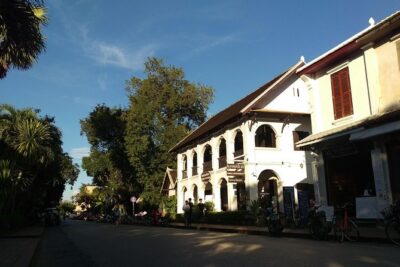
Browse the lists this tour appears in