
Reviewed · LUANG PRABANG TOURS
3 Days The Plain of Jars and Xieng Khouan (Depart from Luang Prabang)
A trip to the Plain of Jars and Xieng Khouan is interesting because it mixes big visual stops with real, on-the-ground war history and daily life in rural Laos. I like that you see jar sites tied to the area’s legend, not just a quick photo stop. I also like the balance of morning villages and markets with a later visit to the MAG UXO Visitor Information Centre, so you understand what shaped this region. The main drawback to consider is that the schedule is full, the driving is long, and some content around unexploded bomb history can feel heavy.
This 3-day tour is built around an early start from Luang Prabang, comfortable transport, and a guided day that stays organized even when the pace gets challenging. It’s private, meaning it’s only your group in the vehicle and on the stops, which usually makes it easier to ask questions. Just keep in mind that meals and accommodation are not included, so you’ll want to plan those alongside the tour.
Key highlights worth your attention
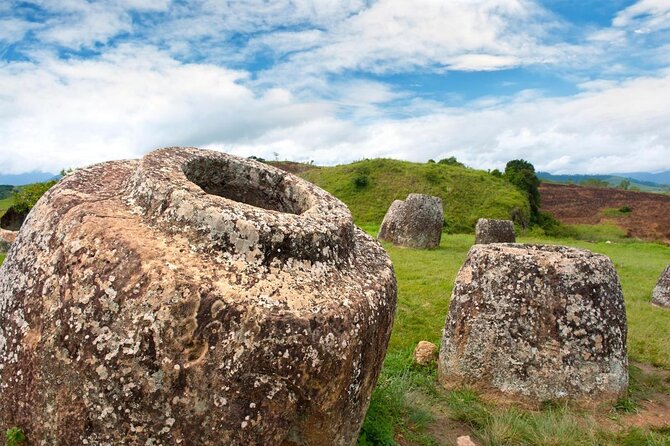
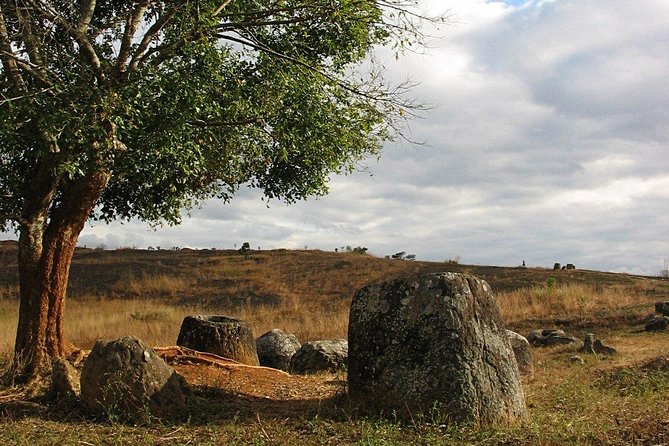
- Jar Site 2 and Hai Hin Hoo Sarat plus a stop where villagers turn unexploded-bomb scrap into spoons you can actually watch the story behind
- Tham Phra (Buddha Cave), where you see old Buddha images in caves that also served as wartime hospital and shelter space
- Muang Khoun, Wat Phiawat, including a 14th-century royal palace area linked to both earlier Phuan Kingdom power and later French colonial administration
- MAG UXO Visitor Information Centre, paired with official tourist info to help you connect what you see in the jars to what happened after the war
- Morning market and mulberries organic silk farm, where you can follow silk weaving from cocoons to colorful scarves
- Air-conditioned vehicle and included fees, so your day-to-day costs stay predictable
Why the Plain of Jars feels different than a standard Laos temple day
Most tours in Laos lean heavily on temples and viewpoint photos. This one is more about place and consequence. You’re heading to Phonsavan and Xieng Khouan, an area where the famous jar landscape sits alongside the realities of war leftovers and long-term recovery.
I also like that it’s not only “big monuments.” The route includes village stops along the way out of Luang Prabang, plus market time and a working silk farm. That mix matters, because it helps you see how people live now, not just what the area looked like in the past.
Finally, it’s a guided trip designed to keep you moving without leaving you lost. In other outings with this operator, guides have been described as kind and professional, and able to handle an action-packed schedule while sharing cultural context. For you, that usually means fewer awkward moments and more sense of why each stop matters.
Lining up Luang Prabang? These sit well beside it:
- Luang Prabang: Cruise to Pak Ou Caves & Kuang Si Waterfalls
★ 5.0 · 1,769 reviews - Luang Prabang: Cruise to Pak Ou Caves & Kuang Si Waterfalls
★ 4.8 · 1,360 reviews - Half Day Mekong Cruise to Pak Ou Caves (Morning / Afternoon)
★ 4.6 · 290 reviews
Getting out of Luang Prabang: the early start and 260 km reality
Your day begins early, with a stated start time of 8:00 am from the Manifa Travel Luang Prabang office area. You’ll be picked up, travel by air-conditioned vehicle, and point the car east toward Phonsavan, about 260 km away. Expect a long day even when the stops are enjoyable, because the distance is the distance.
This is where you should adjust your expectations. If you prefer a slow, meandering pace, this tour may feel intense. The upside is that you don’t waste time trying to coordinate transport on your own. You get a route that strings together culturally meaningful places instead of just checking boxes.
One more practical note: start time and actual departure can be slightly different in practice because pickup timing varies by group. Just plan your morning in Luang Prabang so you are ready before the clock, not at the last second. (That’s not a “travel trick,” it’s just how early starts work.)
Day 1 in Phonsavan country: Phou Khoun hill tribes and Tham Phra Buddha Cave
Phou Khoun, with village life along the road
On Day 1, you’ll make an early drive toward Phonsavan, with a stop at Phou Khoun. The tour includes stops along the road to see Hmong and other hill tribe minority villages, with time to get a look at how people live and how communities relate to visitors.
What I like about this first segment is the tone. It’s not framed as a staged performance. You’re seeing everyday village presence, and the people you meet are described as friendly and welcoming. That matters because it sets a respectful mood for the rest of the journey.
The consideration here is simple: you are on a road trip. You might not control how much time you get inside each village stop. If you want deep, unhurried interactions, keep your questions ready and be flexible about time.
Slow the Luang Prabang day right down:
- Luang Prabang: UNESCO World Heritage City Highlights Tour
★ 4.6 · 201 reviews - Luang Prabang: Afternoon Kuang Si Waterfalls & Sunset Cruise
★ 4.6 · 158 reviews - Luang Prabang: Evening Cooking Class & Local Baci Ceremony
★ 4.9 · 151 reviews - Luang Prabang: Kayak Tour to Pak Ou Caves
★ 4.4 · 115 reviews
Tham Phra (Buddha Cave) at Nong Tang
After Phou Khoun, you head onward to Nong Tang for Tham Phra (Buddha Cave). You’ll visit Tham Pha caves, where you can see Buddha images said to be more than 200 years old. The caves also have a wartime story, because they served as hospitals and shelters during the conflict period.
This stop is a good example of why this tour feels heavier in a good way. It connects spirituality and survival. You look at old religious images, then you realize these same caves were repurposed in hard times. Even if you don’t know the full historical timeline, the place itself explains a lot.
Practical tip: caves can be cooler and darker than you expect. Bring something you can layer, and wear shoes with grip if the cave approach is uneven. It’s the kind of detail that keeps your day comfortable.
Day 2 on the jar sites: legends, Jar Site 2, and the UXO lesson you cannot skip
Day 2 is the heart of the trip. You spend the day touring the Plain of Jars and Xieng Khouang, then you connect those jar sites to the region’s war history through museum-style learning and a visitor centre.
This is also the day with the most emotional weight. The tour includes places tied to the Second Indochina War and unexploded-bomb remnants. If that topic makes you uncomfortable, plan your mental space for it. If you can handle it, this is where the tour becomes memorable in a lasting way.
The Plain of Jars: the legendary sight and why it matters
You’ll start after breakfast with a day focused on the Plain of Jars and nearby areas. The jar landscape is iconic for a reason, but the real value comes from how the day is structured. You’re not only looking at objects, you’re being guided to understand the legend and the traces of history around the site.
The downside of big legendary sites is that they can become just a photo mission. Here, the presence of other stops later in the day helps you keep perspective. You’ll see why the jar area sits in a landscape marked by war and recovery.
Jar Site 2 (Hai Hin Hoo Sarat) and the Ban Na Pia spoon making
You’ll then visit Jar Site 2, identified as Hai Hin Hoo Sarat, about 20 km southwest of Phonsavan. After that, you go to Ban Na Pia, near Jar Site 2, where villagers are using scrap from unexploded bombs to make spoons that they sell as souvenirs.
I like including this stop, because it stops the story from living only in the past. You’re seeing a present-day adaptation, not just a historic tragedy. It also gives you a chance to shop thoughtfully. If you buy a spoon, you’re supporting local work tied to living with the aftereffects of conflict.
A consideration: this is not a “cute souvenir market” in the usual sense. It’s personal and practical work. Be respectful with your questions, and don’t treat the objects like props for a quick snapshot.
Muang Khoun and Wat Phiawat, the royal palace area
In the afternoon, you head to the ancient capital of Muang Khoun, connected with Wat Phiawat. The stop highlights a 14th-century royal palace of the Phuan Kingdom. It also notes Muang Khoun’s later role as the capital of the French colonial provincial city until recently.
This part of the day broadens the story again. The jar sites tell one chapter, but the palace area helps you understand that the region’s importance didn’t end with war. It also shows how different powers and eras layered into the same physical space.
Practical note: palace areas and old sites can involve walking over uneven ground. If you’re using heavy footwear, you’ll probably be fine. If you show up in slippery sandals, you’ll regret it.
MAG UXO Visitor Information Centre, plus official tourist context
After returning to Phonsavan around 4 pm, you visit the MAG UXO Visitor Information Centre and an Official Tourist Information Centre. This is a strong pairing, because it turns what you saw earlier into meaning you can process.
Why I recommend this sequence: you already encountered jar sites and the spoon-making stop, so your questions are live. The visitor centre and information point give you clearer context for the unexploded-bomb reality tied to the region.
If you like your travel with a moral compass, this is a place to slow down. Read what you can, ask what you’re curious about, and give yourself time to take it in. Even if you know little about the history, the centre helps you get your bearings fast.
Day 3 starts gentle: morning market plus mulberries silk farm
Day 3 begins with a more grounded rhythm. After breakfast, you go to a morning market and fair-trade Mulberries Organic Silk Farm.
The market and what to notice
The market stop can be simple, but it’s often where you feel the real pulse of a place. This tour’s pace gives you time to look around, see what’s for sale, and notice what people are doing early in the day. You’ll also get a chance to connect what you saw in villages earlier to how food and daily needs look on the ground.
If you like taking photos, keep it respectful. Look first, ask if needed, and focus on scenes that show daily routines rather than faces taken out of context.
Mulberries Organic Silk Farm: from cocoons to colorful scarves
At the Mulberries Organic Silk Farm, visitors can observe silk weaving from cocoons to colorful scarves. The description emphasizes the organic and fair-trade side, so you’re not only watching a craft. You’re learning how a farm process becomes wearable art you can take home.
This stop also works well after Day 2’s heavy topics. It’s hands-on in a calmer way, and it gives you something concrete you can remember later. If you buy a scarf here, you’re buying a product linked to a process you actually saw.
One practical consideration: silk-weaving demonstrations may be longer than you expect, depending on the flow of the day. Bring a water bottle and be ready to stand or sit comfortably for a while.
Price and value: is $540 per person fair for 3 days?
The price is $540 per person for approximately 3 days, from Luang Prabang. That sounds steep at first glance until you look at what’s included.
You get:
- All sightseeing described in the program
- Air-conditioned vehicle for the distance from Luang Prabang
- All fees and taxes
You do not get:
- Accommodation
- Meals
So the real comparison isn’t the number alone. It’s what you’re outsourcing. Long-distance transportation, structured site visits, and included fees can add up quickly if you try to assemble it on your own, especially in smaller destinations where scheduling can get tricky.
The private group format matters too. Even though the tour notes group discounts, it also states it’s private, meaning the tour is only for your group. For you, that usually means less waiting around for random drop-in participants, and a smoother pace.
If you’re traveling solo, that price is the price. If you’re traveling with one or two friends, private tours often feel more reasonable because you split the total cost while still getting the same guided access.
What kind of traveler should book this?
This tour is best for you if you want:
- A real sense of Xieng Khouang, not just a single viewpoint
- Cultural context alongside dramatic sights
- War-related history told through places you visit, including the jar landscape and visitor information
- A day that includes both rural community stops and a working craft experience
It may not be your best fit if you want:
- A light, easygoing vacation with no heavy topics
- Lots of free time to wander at your own pace
- A slower tempo built around fewer stops
Also, the tour says most travelers can participate. Still, think about walking on uneven ground at caves and old sites, and plan for long seated time in the vehicle.
Should you book the Plain of Jars and Xieng Khouan tour?
I think you should book it if you’re the type of traveler who likes to understand a place, not just visit it. The combination of jar sites, the war legacy learning, and the market and silk farm makes the trip feel balanced across emotion and everyday life.
I also like that it’s organized with included fees and a guided vehicle, which makes the route feel more manageable than a self-planned road trip. And because it’s private, you’ll get a better chance to ask questions without feeling rushed.
Skip it only if you know you prefer zero discomfort topics and a very relaxed pace. This trip is full and thoughtful. It will ask you to pay attention.
If you do book, pack for early days, bring comfortable shoes, and keep your curiosity switched on. You’ll come away understanding why these jars are famous, and why the region still carries the marks of war in practical, human ways.
FAQ
How long is the Plain of Jars and Xieng Khouan tour?
The tour is listed as 3 days (approx.).
Where does the tour start and when?
It starts at the Manifa Travel Luang Prabang Office on SAKKALINE RD at 8:00 am.
What does the tour include?
It includes all sightseeing described in the program, an air-conditioned vehicle, and all fees and taxes.
Are meals included?
No, meals are not included.
Is accommodation included?
No, accommodation is not included. It is available upon request.
Is pickup offered?
Yes, pickup is offered.
Is this a private tour?
Yes. It’s described as private, and only your group will participate.
Are admission tickets included for the stops?
The stops are listed with admission tickets as free, and all fees and taxes are included in the tour.
What is the cancellation refund policy?
You can cancel up to 6 days in advance for a full refund. Cancellation rules also mention a 50% refund if you cancel 2 to 6 days before the start time, and no refund if you cancel less than 2 days before.
The newest Luang Prabang reviews
- A Relaxing Day at the Kuang Si Falls★ 4.5 · 3 reviews
- Sunset Cruise in Luang Prabang with Live Performance★ 4.5 · 3 reviews
- Private Luang Prabang City Tour★ 5.0 · 3 reviews
- Luang Prabang Night-time Explorer★ 3.5 · 3 reviews
- The Namkhan – Traditional Lao Bamboo Weaving★ 5.0 · 4 reviews
- Luang Prabang Cooking, Pottery & Candle Experience★ 5.0 · 4 reviews
- Private Tour: Half-Day City Tour of Luang Prabang★ 4.5 · 4 reviews
- Dine and Cruise on Mekong River★ 4.0 · 4 reviews
Luang Prabang Tours, compared.
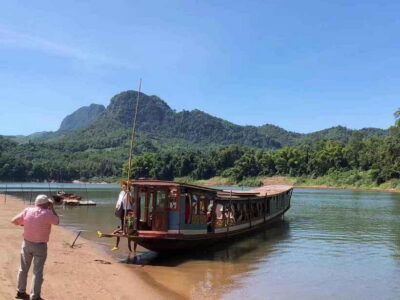

Half Day Mekong Cruise to Pak Ou Caves (Morning / Afternoon)
Read our review →
Browse the lists this tour appears in